
Zelensky sabe utilizar as redes sociais

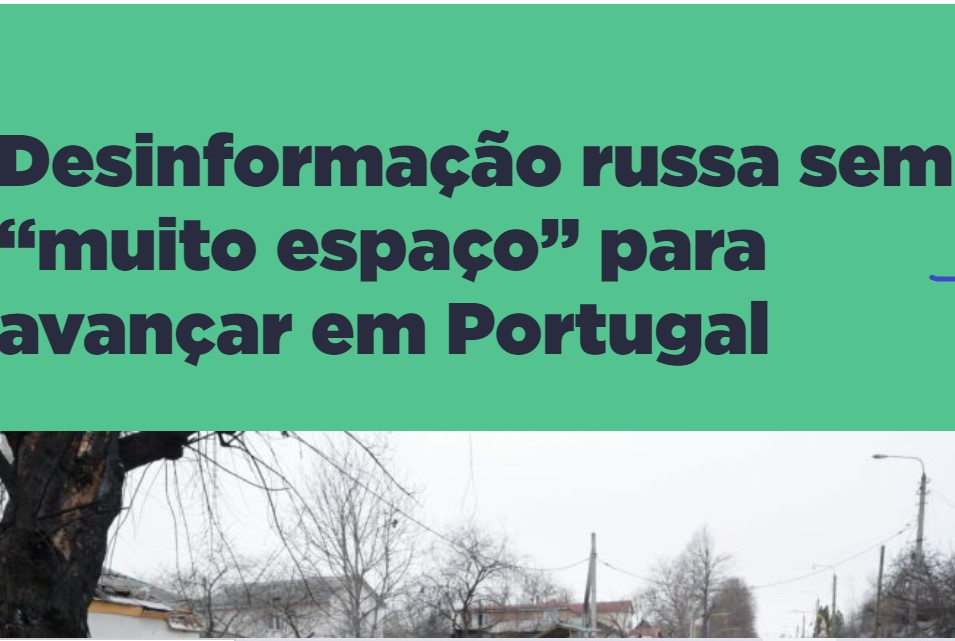
O presidente ucraniano tem demonstrado como se pode usar as redes sociais para mobilizar o país e comunicar com o resto do mundo, disse Miguel Crespo.  “Essa é provavelmente a grande surpresa desta guerra. O senhor Putin, presidente russo, e os seus estrategas também se esqueceram desse detalhe”, explicou o investigador do IBERIFIER à agência Lusa, dia 16 de março. https://combatefakenews.lusa.pt/ucrania-desinformacao-russa-sem-muito-espaco-para-avancar-em-portugal-investigador-c-audio/.

A análise da estratégia comunicacional permite distinguir um modelo do século XX e outro do século XXI, disse o professor do ISCTE. “A Rússia, neste momento, não tem sequer uma comunicação externa que faça sentido. Tudo o que eles estão a fazer é limitar o acesso à comunicação, como se fazia no século XX” Desinformação russa sem “muito espaço” para avançar em Portugal — DNOTICIAS.PT .

Sobre a proibição pelo Conselho Europeu dos canais russos Russian Today, RT, e Sputnik News, o investigador considerou o precedente preocupante e propõe um “debate alargado” mal o conflito termine https://www.noticiasaominuto.com/mundo/1954682/investigador-defende-amplo-debate-apos-proibicao-de-canais-russos. De qualquer modo, defende que a desinformação russa não tem tido muito espaço para avançar em Portugal.

Miguel Crespo criticou ainda o paradoxo da posição da empresa Meta, que detém o Facebook, que permite discurso de ódio quando o alvo é Putin. “Não podemos dizer que há discurso de ódio bom e discurso de ódio mau”.
Otros artículos

Mozambican journalists strengthen skills to tackle the challenges of digital information

The Introduction to Digital Journalism course, focused on the challenges and opportunities created by the digital transformation of journalism, concluded on 24 July in Maputo, Mozambique. The training addressed the growing importance of digital...

Fact-checking report: Immigration is the main disinformation topic in Spain and Portugal

Immigration was the most prominent disinformation topic identified in Spain and Portugal between March and May 2026. The finding comes from IBERIFIER’s quarterly report, which brings together the main false claims and disinformation narratives...

Ramón Salaverría warns of the weakening of discourse centred on evidence

IBERIFIER coordinator Ramón Salaverría warned of the growing difficulty in distinguishing truth in a context shaped by disinformation, the increasing influence of emotions, and the erosion of consensus around evidence. He delivered his remarks...

Report: Spain & Portugal fact-checking brief

This report collects the main hoaxes and disinformation narratives detected in Spain in Portugal from March to May. Iberifier-Report-Q2-vfinalDownload

Newtral study identifies the “rhetorical package” behind the spread of disinformation and hate speech on social media during the Torre Pacheco unrest

Research by Newtral and the University of Granada finds that a combination of group identity, distorted information, unjustified causal inferences and emotionally charged language consistently appeared in viral content related to the unrest that...