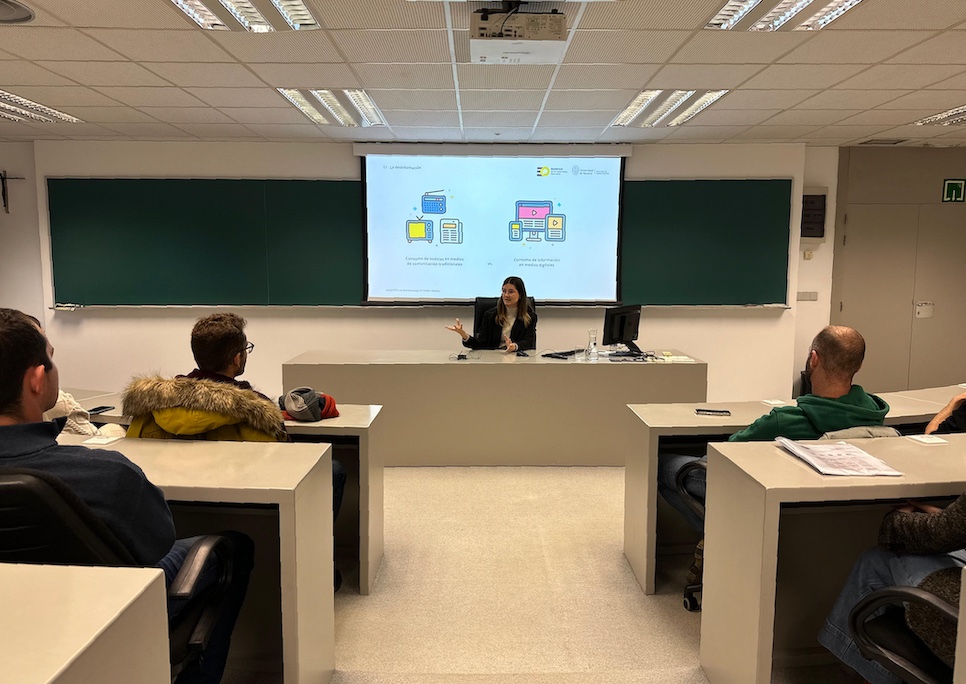
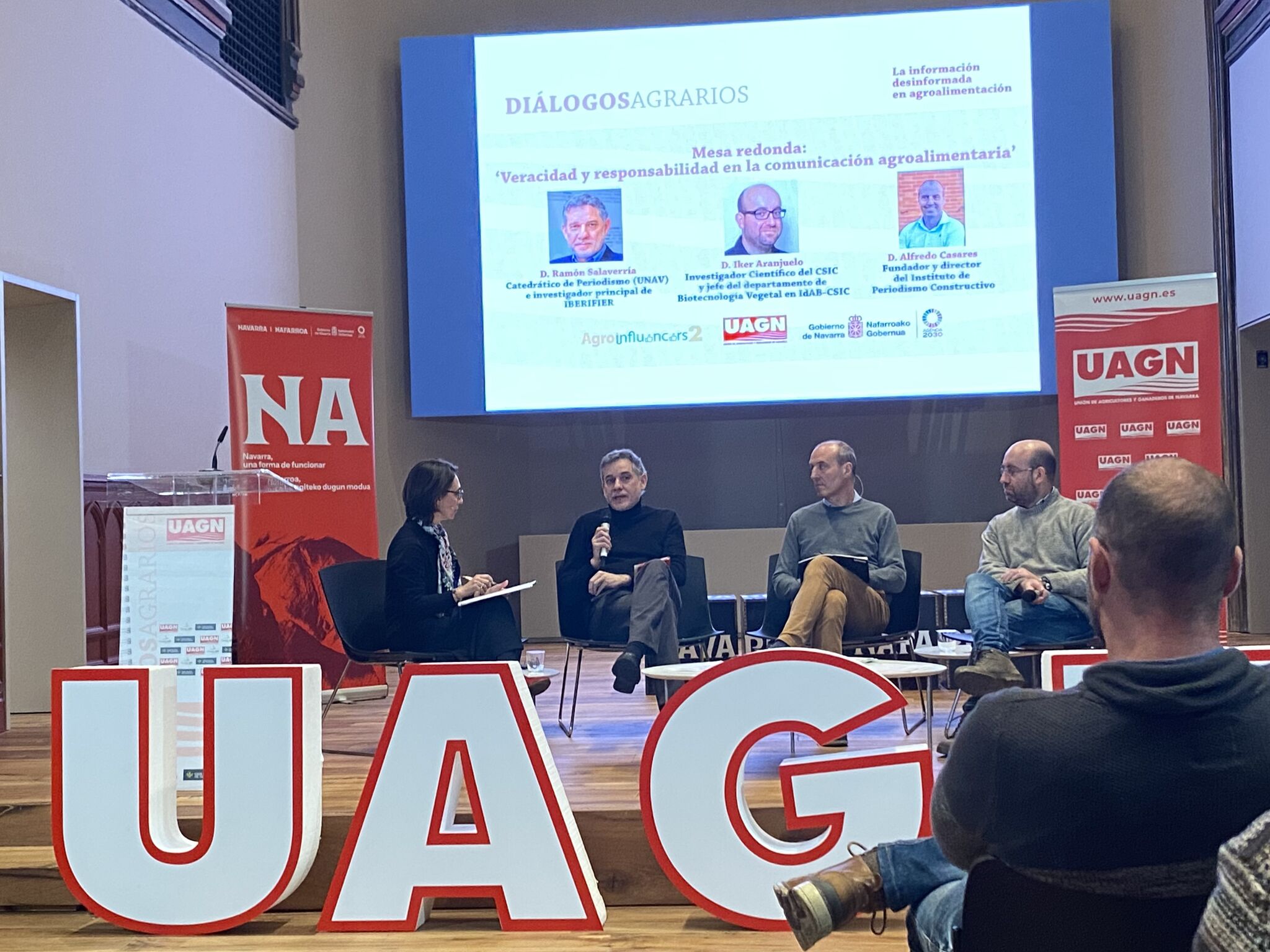
As part of the ‘Agroinfluencers’ project, promoted by the Union of Farmers and Ranchers of Navarre (UAGN), participants attended a training session at the University of Navarra led by researcher Anais Sánchez Hualde. The session focused on the issue of digital media disinformation and included a presentation of the IBERIFIER project. Additionally, Ramón Salaverría, Professor of Journalism (UNAV) and coordinator of IBERIFIER, participated in a roundtable discussion on truthfulness and responsibility in agri-food communication during the event “Misinformed Information in Agri-food,” held on December 12.
The ‘Agroinfluencers’ project aims to empower young people connected to the agri-food sector with digital communication skills, promoting an effective presence on social media. This year, the program places special emphasis on combating disinformation to ensure the creation of reliable and accurate content that represents the sector.
One of the goals of the IBERIFIER observatory is to raise public awareness about disinformation at both national and multinational levels by organizing and participating in media literacy activities. Through involvement in initiatives like this, the project seeks to equip the general population—and in this case, young content creators in the agri-food sector—with the tools and knowledge to tackle the challenges of the digital information landscape.
(ESP)
Acercando el fenómeno de la desinformación en medios digitales y el proyecto IBERIFIER a jóvenes ‘agroinfluencers’
En el marco del proyecto ‘Agroinfluencers’, impulsado por la Unión de Agricultores y Ganaderos de Navarra (UAGN), los participantes han asistido a una sesión formativa en la Universidad de Navarra impartida por la investigadora Anais Sánchez Hualde, quien abordó el problema de la desinformación en medios digitales y presentó el proyecto IBERIFIER. Además, Ramón Salaverría, Catedrático en Periodismo (UNAV) y coordinador de IBERIFIER, participó en una mesa redonda sobre la veracidad y responsabilidad en la comunicación agroalimentaria, en la jornada “La información desinformada en agroalimentación” celebrada el pasado 12 de diciembre.
El proyecto ‘Agroinfluencers’ busca empoderar a jóvenes vinculados al sector agroalimentario con habilidades de comunicación digital, promoviendo una presencia efectiva en redes sociales. Este año, el proyecto pone un énfasis especial en combatir la desinformación, con el objetivo de generar contenidos fiables y rigurosos que representen al sector.
Uno de los objetivos del observatorio IBERIFIER es el de promover la concienciación ciudadana frente a la desinformación, a nivel nacional y multinacional, organizando y participando en actividades de alfabetización mediática. Mediante la implicación en este tipo de iniciativas, se pretende dotar de herramientas y conocimiento a la población en general, y esta ocasión en particular, a los jóvenes creadores de contenido del sector agroalimentario.