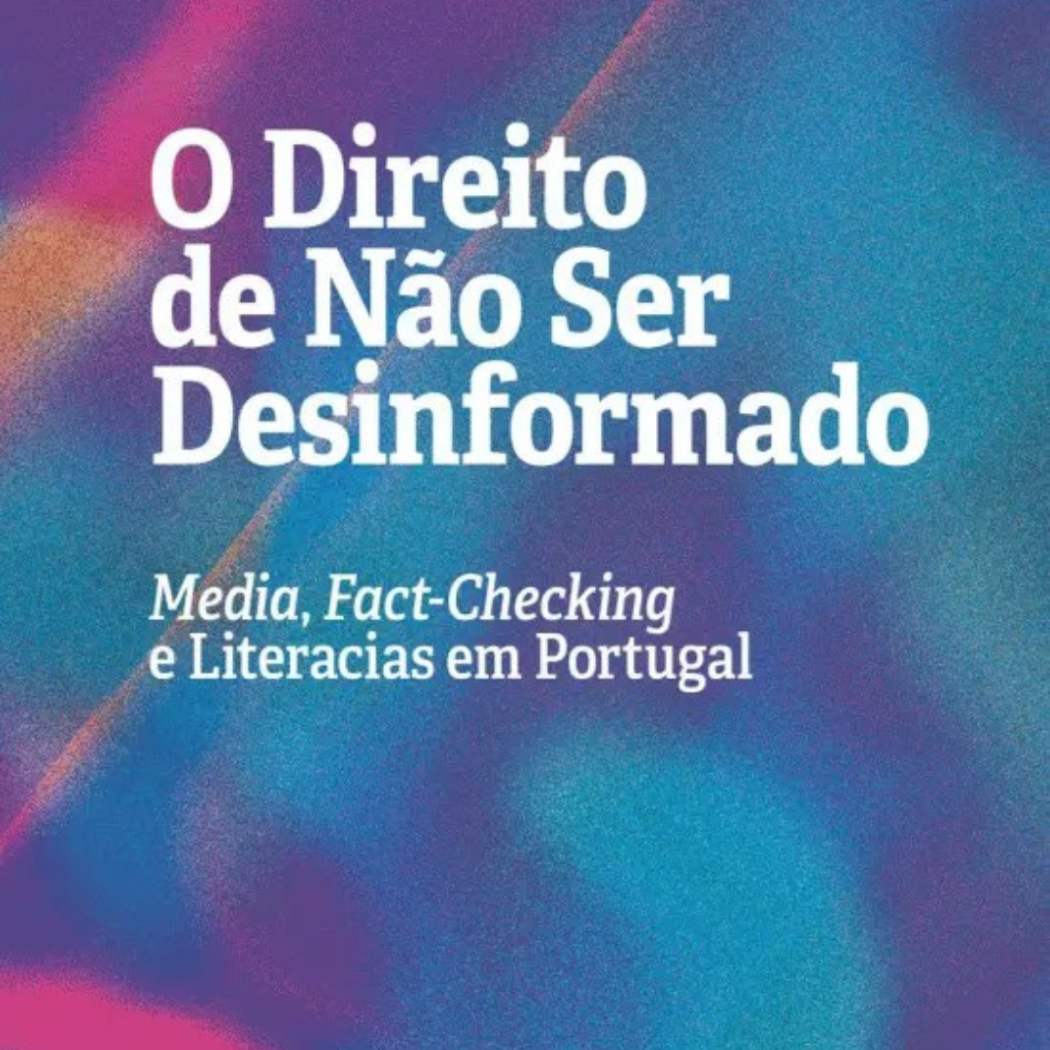
“The Right to Not Be Misinformed, Media, Fact Checking and literacies in Portugal”, published by Almedina editor, this month, is a book that analysed the stakeholders in today’s social communication and the way they act in public spheres. The book ends by calling for reflection on the role of literacy, journalism, and new consumers and participants in the public sphere. The beginning of the book recalls Hannah Arendt in ‘Truth and Politics’ in the New Yorker in 1967: Freedom of opinion is a farce if information about the facts is not guaranteed and if the facts themselves are not the subject of debate.
Gustavo Cardoso signs the foreword ‘My “information” is better than your “disinformation”’, in which he analyses the concept of authenticity in the new ecosystem, in contrast to what it seemed to be in the mass communication model.
Vania Baldi, who organizes the set of texts that can be read in this work, explains the choice of title. Claiming the right not to be misinformed means claiming a multiplicity of rights. The research and professor of ISCTE – IUL, and membre of IBERIFIER, analyses the current moment of journalism and its importance in maintaining democratic organization.
The book includes chapters based on studies carried out by the IBERIFIER project, dedicated to analysing disinformation in the international and local context, but mainly focused on the on the media challenges facing the Iberian Peninsula. In this sense, the scenarios of disinformation are analysed, its socio-political repercussions and the institutional journalistic and new journalistic pratices, new consumption habits, activities to increase literacy levels, among many others.