
Zelensky sabe utilizar as redes sociais

O presidente ucraniano tem demonstrado como se pode usar as redes sociais para mobilizar o país e comunicar com o resto do mundo, disse Miguel Crespo.  “Essa é provavelmente a grande surpresa desta guerra. O senhor Putin, presidente russo, e os seus estrategas também se esqueceram desse detalhe”, explicou o investigador do IBERIFIER à agência Lusa, dia 16 de março. https://combatefakenews.lusa.pt/ucrania-desinformacao-russa-sem-muito-espaco-para-avancar-em-portugal-investigador-c-audio/.

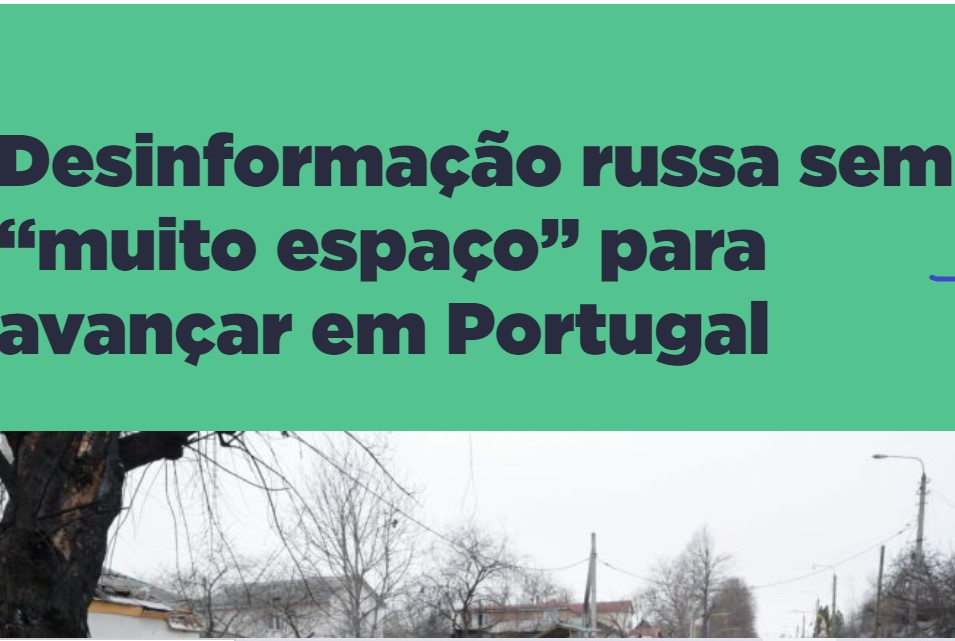
A análise da estratégia comunicacional permite distinguir um modelo do século XX e outro do século XXI, disse o professor do ISCTE. “A Rússia, neste momento, não tem sequer uma comunicação externa que faça sentido. Tudo o que eles estão a fazer é limitar o acesso à comunicação, como se fazia no século XX” Desinformação russa sem “muito espaço” para avançar em Portugal — DNOTICIAS.PT .

Sobre a proibição pelo Conselho Europeu dos canais russos Russian Today, RT, e Sputnik News, o investigador considerou o precedente preocupante e propõe um “debate alargado” mal o conflito termine https://www.noticiasaominuto.com/mundo/1954682/investigador-defende-amplo-debate-apos-proibicao-de-canais-russos. De qualquer modo, defende que a desinformação russa não tem tido muito espaço para avançar em Portugal.

Miguel Crespo criticou ainda o paradoxo da posição da empresa Meta, que detém o Facebook, que permite discurso de ódio quando o alvo é Putin. “Não podemos dizer que há discurso de ódio bom e discurso de ódio mau”.
Otros artículos

EFE Verifica wins Global Fact-Checking Award for “Fake News, Real Victims”

The Spanish news agency received a Global Fact-Checking Award on 19 June for its multimedia project Fake News, Real Victims (Noticias falsas, víctimas reales). The distinction was awarded during an international conference held in...

From fact-checking to Community Notes: new special issue examines the changing fight against disinformation on social media

The new special issue of the scientific journal Communication & Society, entitled “From Fact-Checking to Community Notes: Structural Changes in the Fight Against Disinformation on Social Media”, is now available. This special edition is...

Three IBERIFIER team projects shortlisted for the IFCN’s Global Fact-checking Awards

The projects "Noticias falsas, víctimas reales" by EFE Verifica, "Laura" by Newtral, and the research that looked into more than 1,000 fraudulent Facebook pages by Maldita.es, three organisations that are part of the...

Journalist Irene Larraz, a membre of the IBERIFIER team, has completed her PhD with a thesis on artificial intelligence and fact-checking

The growing use of artificial intelligence in content verification was the central focus of the research carried out by Irene Larraz as part of her doctoral studies, which she defended on 5 June at...

University of Navarra promotes a media literacy model based on real-world experiences and critical thinking

Through its School of Communication and its involvement in international projects such as IBERIFIER, the University of Navarra has been developing a range of initiatives aimed at strengthening citizens’ skills in analysing, verifying and...