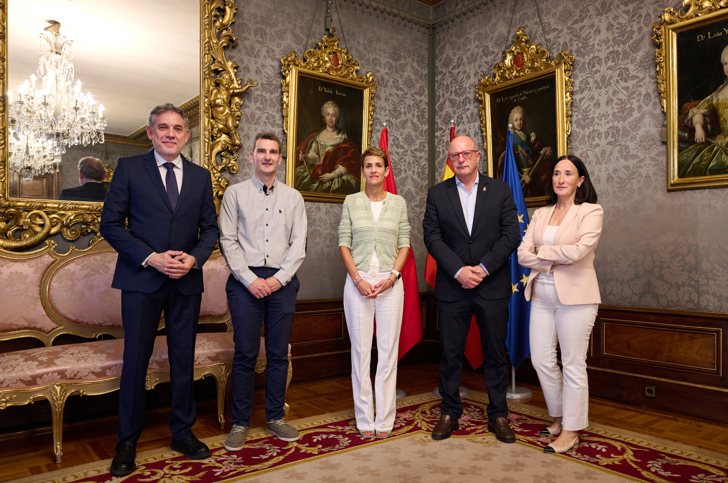
The Government of Navarra and the University of Navarra, through the IBERIFIER observatory, have signed a collaboration agreement to combat disinformation and promote media literacy in the region’s education system. The initiative, presented on 16 June 2025 at the Palacio de Navarra, aims to foster critical thinking and responsible consumption of digital content among primary and secondary school students.
The agreement includes the development of research on the impact of disinformation in schools, as well as the creation of educational materials and training proposals for teachers, integrated into the official teacher training programme. It also foresees the organisation of seminars, conferences, and publications aimed at the broader educational community.
During the presentation, President María Chivite highlighted that “a critical and well-informed citizenry is the best defence of our democracies.” Ramón Salaverría, coordinator of IBERIFIER, added that “training those who train others” is essential in addressing the challenges of disinformation.
The four-year agreement is part of the ikasNOVA Educational Digitalisation Plan and aligns with European digital competence frameworks. It represents a strategic commitment to embedding media literacy as a cross-cutting component of education in Navarra.
_____________________
ESPAÑOL
El Gobierno de Navarra y la Universidad de Navarra, en el marco del observatorio IBERIFIER, han firmado un convenio de colaboración para combatir la desinformación y promover la alfabetización mediática en el sistema educativo navarro. La iniciativa, presentada el 16 de junio de 2025 en el Palacio de Navarra, busca impulsar el pensamiento crítico y el consumo responsable de contenidos digitales entre el alumnado de Primaria y Secundaria.
El acuerdo contempla el desarrollo de una investigación sobre el impacto de la desinformación en el entorno escolar, así como la elaboración de materiales pedagógicos y propuestas formativas para docentes, integradas en el plan de formación del profesorado. Además, se prevé la organización de seminarios, jornadas y publicaciones orientadas a la comunidad educativa.
Durante la presentación, la presidenta de Navarra, María Chivite, subrayó que “una ciudadanía crítica e informada es la mejor defensa de nuestras democracias”. Por su parte, Ramón Salaverría, coordinador de IBERIFIER, destacó que “formar a quienes forman” es clave para enfrentar los desafíos de la desinformación.
El convenio, con una duración de cuatro años, forma parte del Plan de Digitalización Educativa ikasNOVA y está alineado con los marcos europeos de competencia digital. Supone una apuesta estratégica por integrar la alfabetización mediática como eje transversal de la educación en Navarra.