
Qual o papel da Inteligência Artificial e da ciência de dados nas redações?

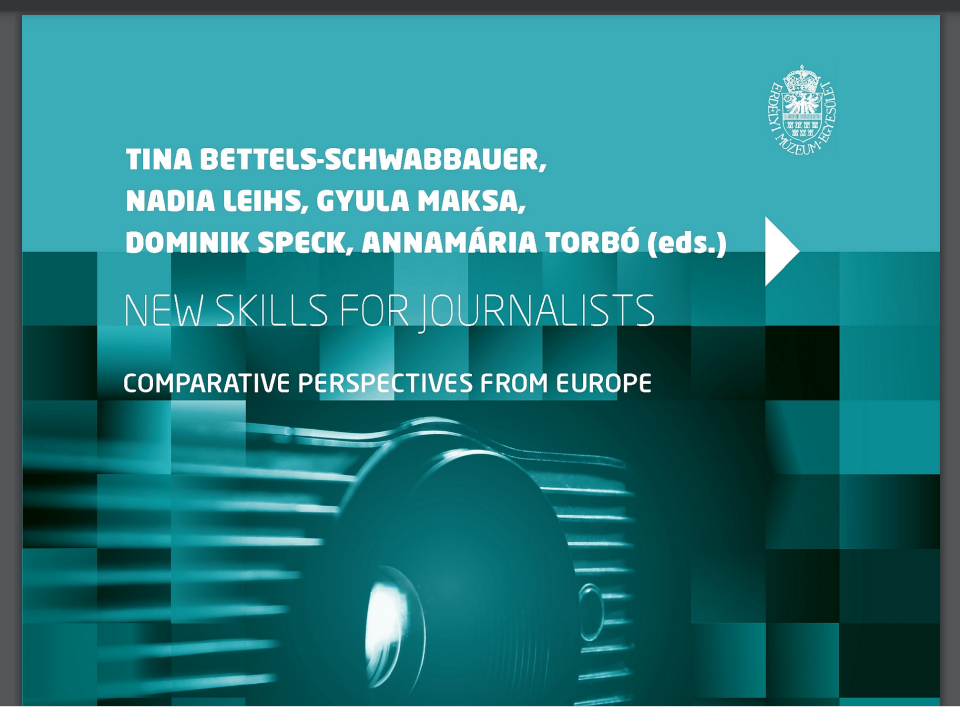
O livro “New Skills for Journalists: comparative perspectives from Europe”, “Novas competências para Jornalistas: Perspetivas comparadas na Europa”, conta com o contributo de Miguel Crespo, Gustavo Cardoso, Ana Pinto-Martinho, em três artigos. Um dos temas analisados pelos investigadores é a presença da Inteligência Artificial (IA) na produção jornalística. Conclui-se que o recurso a relatórios automatizados tem vindo a ser utilizado em áreas específicas como o desporto, informações de trânsito e previsões meteorológicas.

Apesar de a utilização não ser transversal aos temas noticiosos, “o potencial da IA e dos algoritmos foi mencionado como algo que poderia beneficiar todos os tipos de produtos jornalísticos”, refere o artigo “IA e jornalismo, jornalismo robótico e algoritmos”, que procura sistematizar o que está a acontecer nestes domínios nas redações. Para esta pesquisa, foram entrevistados jornalistas, que tratam estas matérias, de cinco países: Portugal, Alemanha, República Checa, Hungria e Roménia.

“Apesar das diferenças na evolução da Inteligência Artificial (IA) no jornalismo de cada país, a maioria dos entrevistados concordam que a entrada de tais técnicas nas redações é inevitável, pelo que a alfabetização nestas áreas é crucial”, é referido no artigo.

https://eda.eme.ro/bitstream/handle/10598/33083/Letoltes14-Journalism.pdf?sequence=1&isAllowed=y&fbclid=IwAR1dQ0lY9maBpa6SF_FeQtnyGrJ7ha4QLh6YH480D3bnltDLyY1WMf18Vcg.

Outro dos trabalhos é sobre “Jornalismo para assistentes de dispositivos de voz”, assinado por Miguel Crespo, Gustavo Cardoso, Ana Pinto-Martinho e Wanessa Andrade. Ana Pinto-Martinho, Miguel Crespo e Gustavo Cardoso também são os autores da análise sobre “Modelos de negócio inovadores”.
Otros artículos

Ramón Salaverría warns of the weakening of discourse centred on evidence

IBERIFIER coordinator Ramón Salaverría warned of the growing difficulty in distinguishing truth in a context shaped by disinformation, the increasing influence of emotions, and the erosion of consensus around evidence. He delivered his remarks...

Newtral study identifies the “rhetorical package” behind the spread of disinformation and hate speech on social media during the Torre Pacheco unrest

Research by Newtral and the University of Granada finds that a combination of group identity, distorted information, unjustified causal inferences and emotionally charged language consistently appeared in viral content related to the unrest that...

IBERIFIER highlights media literacy and disinformation at the Academia de Formadores 2026

Vítor Tomé, who leads the project's Media Literacy strand, delivered the conference presentation "Media Literacy – Disinformation and the Training of Trainers" at the Academia de Formadores 2026, held in Peniche, on 13 July...

Vítor Tomé takes part in two media literacy and artificial Intelligence initiatives in Évora

IBERIFIER researcher Vítor Tomé, who leads the project's Media Literacy strand, took part in two initiatives in Évora dedicated to advancing media literacy and information integrity, on 9 July 2026. The day began with a...

IBERIFIER initiative: Media literacy training in Cabo Verde promotes critical thinking

Video testimonials have been compiled from Cape Verdean journalists who took part in a pilot media literacy project held in November 2025 in Mindelo, on the island of São Vicente. One of the participating...